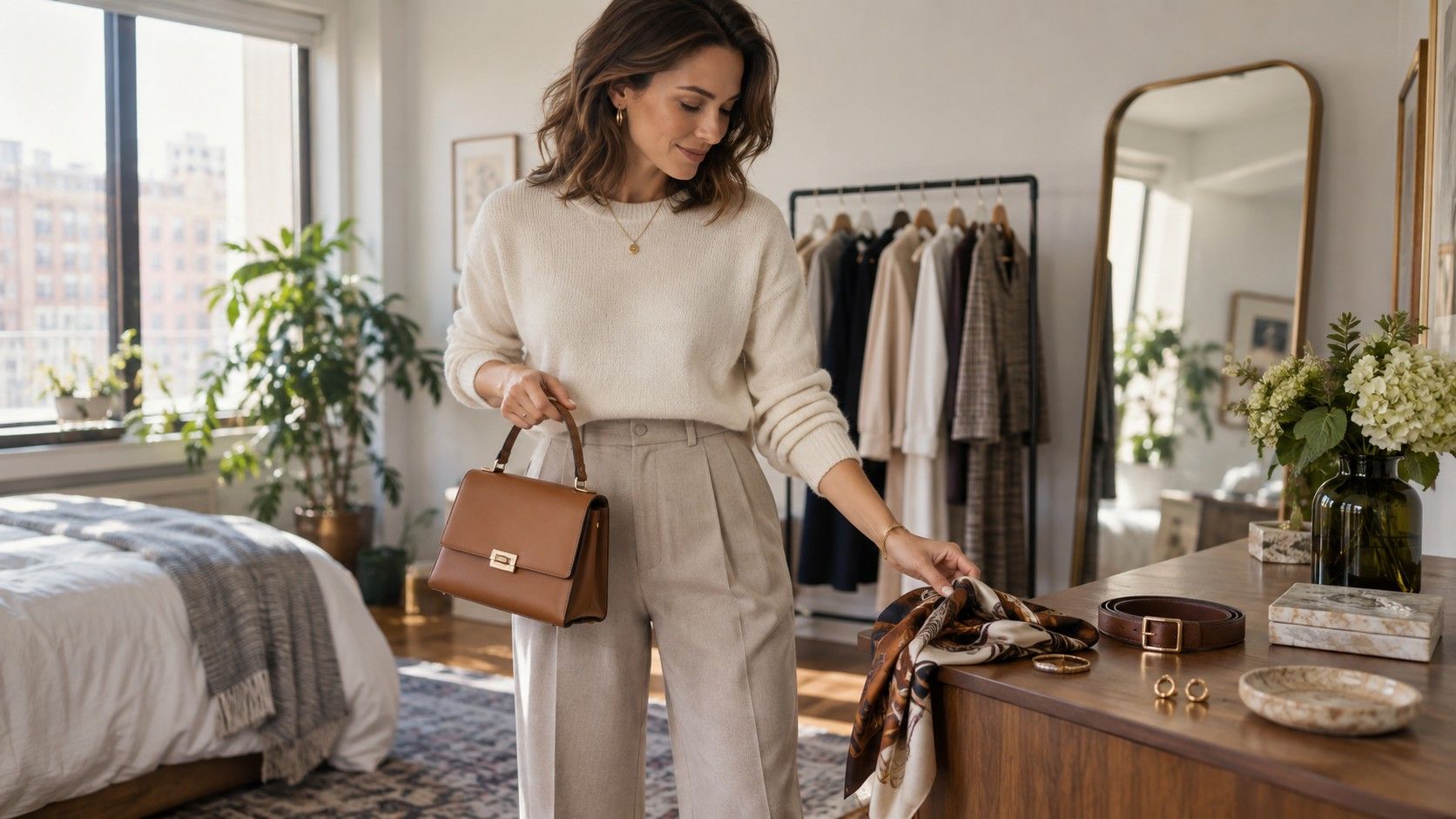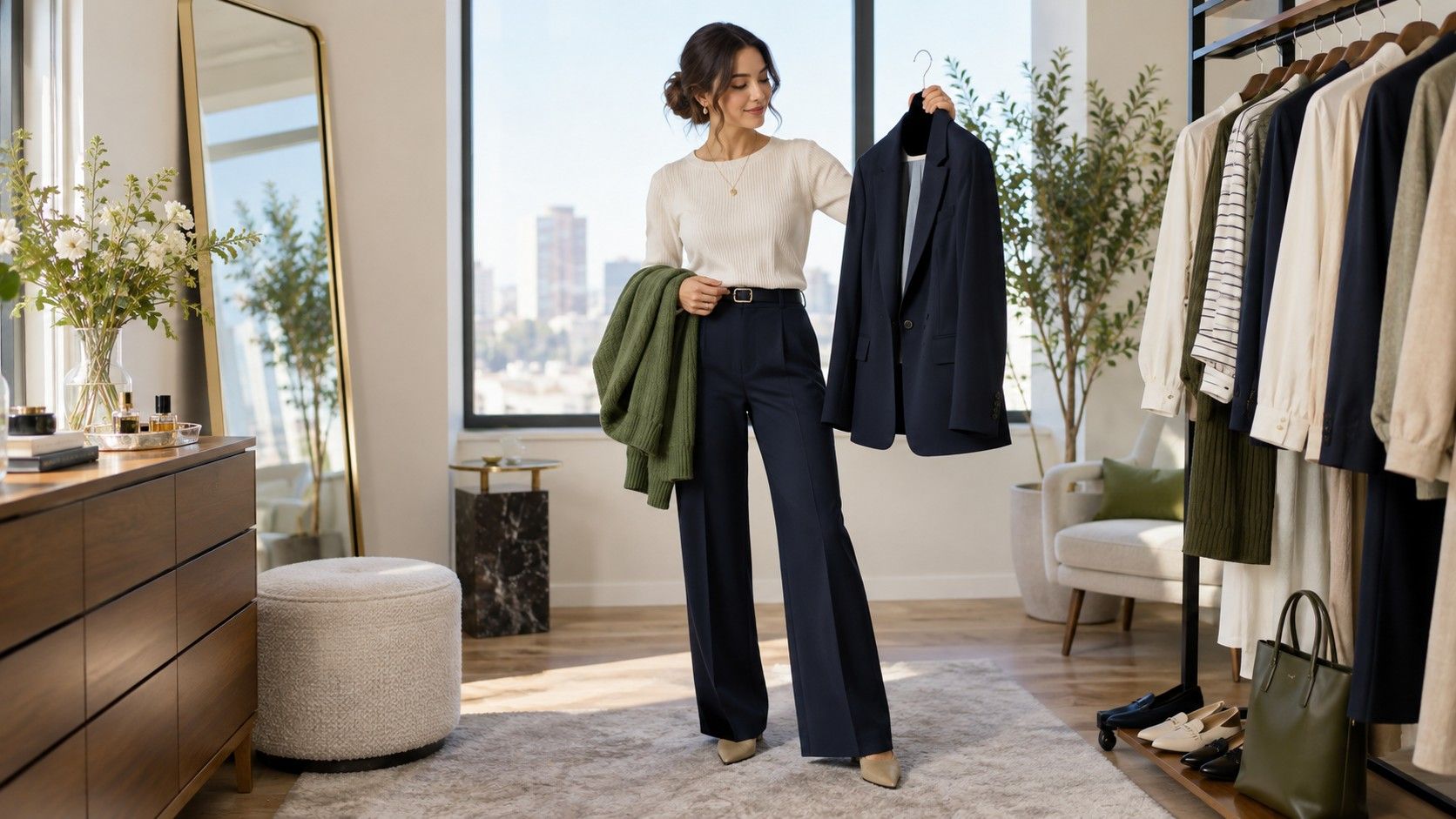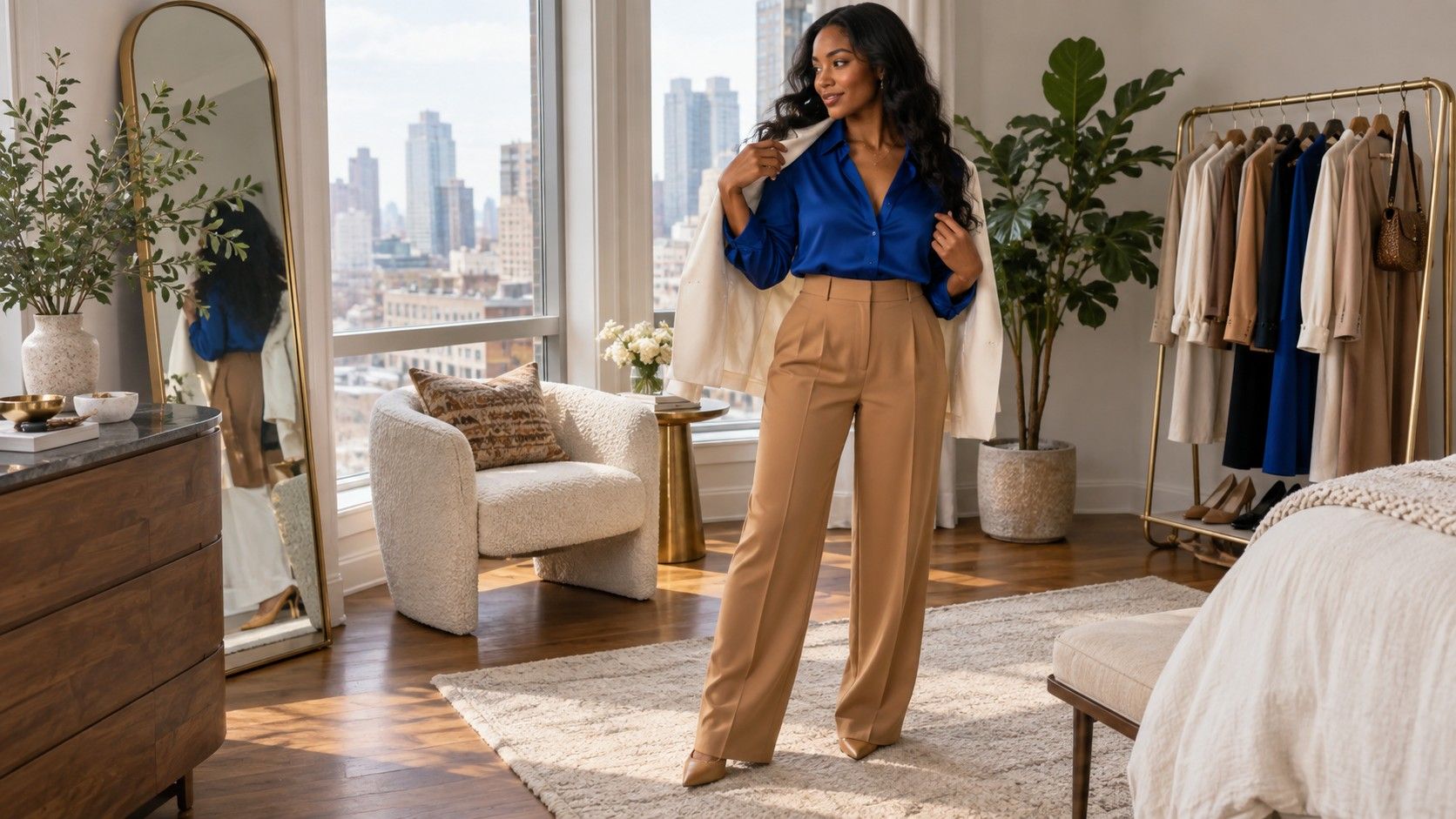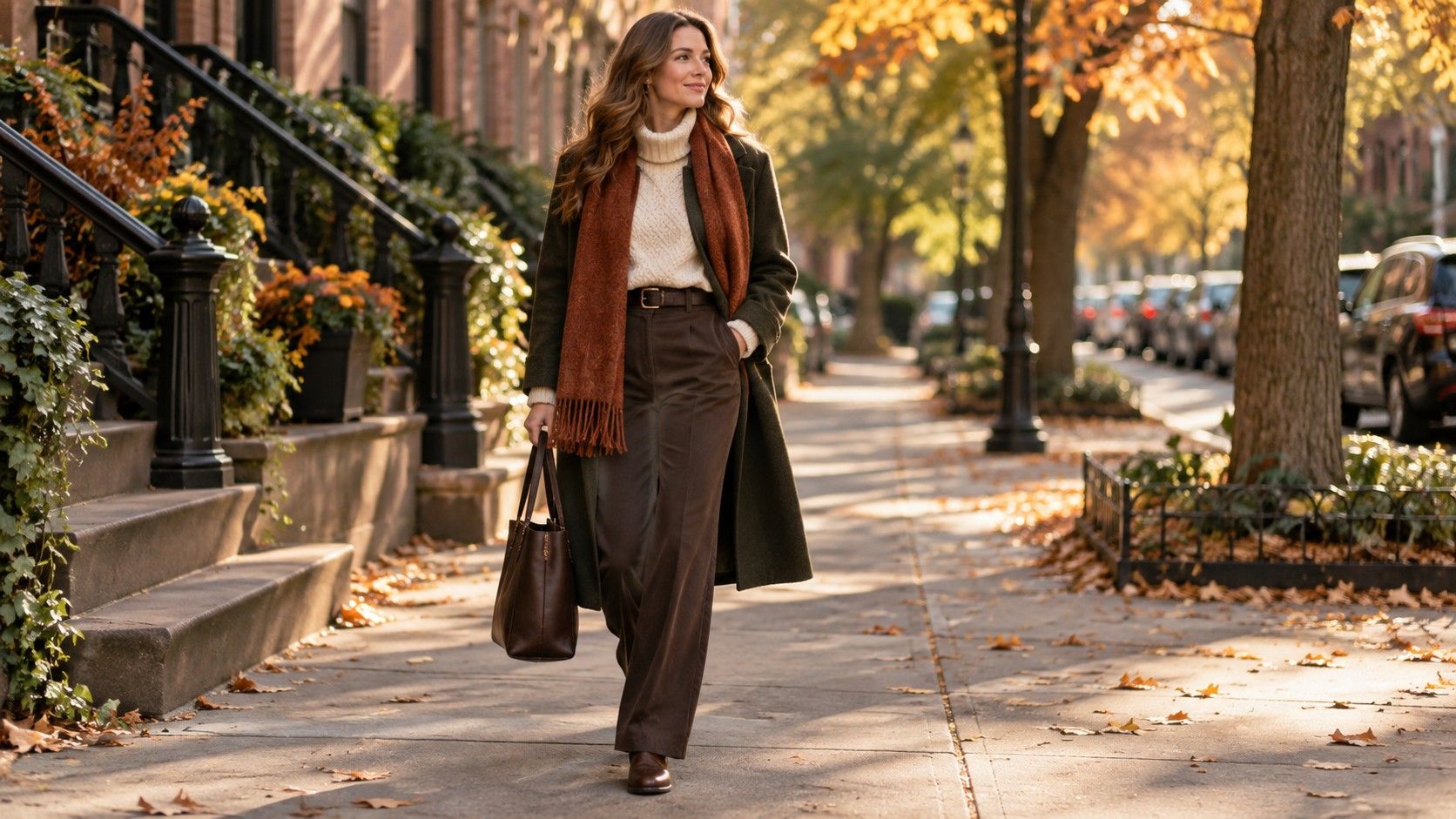
Deep Autumn clothing colors can be satisfying because they give ordinary clothes a sense of weight: espresso, forest green, oxblood, dark teal, rust, and warm cream all look substantial without needing loud prints. The problem begins when every item is treated as a dramatic seasonal statement. A useful wardrobe uses depth as a structure, then varies warmth, texture, and proportion so rich color outfit combinations feel wearable on a rainy Tuesday as well as at a dinner table.
Use depth as the starting point
Depth is often more useful than exact hue. A dark forest green jacket, an espresso trouser, a deep petrol knit, and an oxblood shoe can all belong in the same wardrobe even though they are different colors. They share visual weight. That makes them easy to combine with each other and with dark denim. Start by identifying the deep pieces you already reach for rather than buying every leaf, spice, and wood color associated with autumn.
Black is not automatically excluded, but it can feel colder and sharper than the rest of a deep autumn color palette clothing collection. Espresso, dark olive, ink teal, and blue-black often give similar structure with more warmth or softness. If black is a staple, use it deliberately: black boots with rust trousers can create a crisp modern edge, while black top and brown skirt may need a connecting belt, bag, or patterned scarf to stop the split from feeling accidental.
Look at value contrast around the face. Deep colors can make a pale shirt look too bright if the gap is extreme, or they can make a soft cream collar look elegant when the fabric is substantial. Try cream, ecru, warm stone, and muted camel against your darkest jacket. The best light neutral usually has enough weight to meet the dark piece halfway. Thin bright white cotton can look unrelated; a woolly ecru knit often looks settled immediately.
Choose warmth without making everything orange
Warmth is a spectrum. Rust, tobacco, cinnamon, moss, olive, and dark gold can all work, but the most usable versions usually have depth or a touch of brown. Bright orange, sunny yellow, and clear pumpkin shades are harder to combine because they arrive before the rest of the outfit. A dark rust overshirt, on the other hand, can act almost like a neutral with espresso jeans and leather boots. The difference is saturation, not whether a color is technically warm.
Forest green is one of the most adaptable Deep Autumn clothing colors because it balances warmth with darkness. It can be paired with cream for a classic high-low contrast, with denim for a relaxed look, or with oxblood for a richer combination. Olive is more casual and useful in trousers or outerwear, but choose a version with enough depth. A pale yellow olive can feel utilitarian rather than polished; a smoky olive holds its own beside dark leather and knitwear.
Use gold and warm metal details as punctuation rather than proof of membership in a palette. A brass buckle, antique gold earring, or tortoiseshell frame can connect warm colors, but head-to-toe gold hardware can make an outfit feel styled for a concept. If you prefer silver, wear it. Deep colors have enough density to carry mixed metals, especially when the belt, shoe, and bag provide a coherent darker line.
Mix rich neutrals with one focal color
The easiest deep autumn outfits begin with two neutrals and one color. Espresso trousers, warm cream knit, and forest green coat are a complete formula. Dark denim, tobacco suede jacket, and rust scarf make a casual version. The focal color should be the item you want people to notice first, not necessarily the brightest one. In a deep palette, a textured olive jacket can take that role as easily as a red sweater.
Avoid using every strong color in one look unless the garments are deliberately tonal. Forest green, rust, mustard, burgundy, and camel may all sound harmonious on paper, but together they can look like a themed display. Remove one or two and let the dark neutral create room. If you want more complexity, repeat a color in a small detail: an oxblood shoe with a tiny red thread in a scarf, or a green bag with a green stripe in a knit.
| Dark anchor | Focal color | Light or texture break |
|---|---|---|
| Espresso trousers | Forest green knit | Warm cream shirt collar |
| Dark denim | Rust overshirt | Brown suede boot |
| Deep olive coat | Oxblood bag | Stone-grey knitwear |
| Ink teal skirt | Tobacco leather belt | Muted ivory blouse |
Use texture to keep dark outfits alive
Texture makes dark outfits readable. An espresso cotton trouser, forest green merino knit, and brown leather boot show three distinct surfaces even when the colors are close. Without that change in finish, deep shades can merge into one dense block. Pair matte with a small gloss, smooth with brushed, or soft knitwear with sturdy denim. The objective is not luxury for its own sake; it is allowing the eye to see the separate choices in a dark outfit.
Leather is particularly effective as an accent because it brings depth without another bright color. A dark brown boot, oxblood bag, or tobacco belt can connect warm elements and give soft fabrics a firmer edge. Keep the leather tone within a family rather than matching it exactly. Espresso shoes and a warmer brown belt can coexist when both are dark. Exact matching often makes an outfit look more formal and less flexible than it needs to be.
Prints should have a job. A dark plaid containing green, brown, cream, and muted red can tie a palette together, especially in a scarf or overshirt. A loud novelty print usually competes with the richness of the solids. If you choose a patterned dress or trouser, let the rest of the outfit be almost plain. Deep Autumn clothes already have plenty of visual presence; a print should give a bridge between pieces, not multiply the number of focal points.
Adapt rich colors to the wardrobe you actually have
Build from the category that creates most outfit friction. If trousers are the issue, begin with dark denim, espresso, olive, and one deep neutral skirt or tailored pair. If tops are easier, collect warm cream, forest green, rust, deep teal, and a muted red in fabrics you like wearing. Do not buy all shades at once. Test whether a new color makes at least three existing outfits before it earns a permanent place.
For work, a deep neutral base keeps the palette credible: charcoal or espresso trousers, a warm cream blouse, and a forest green or dark teal layer. For weekends, dark denim and a textured rust knit are enough, with practical brown boots. For evening, use richer fabric rather than more color: a plum velvet blazer, leather skirt, satin-like dark teal top, or an oxblood shoe can shift the same palette into a sharper setting. Depth remains the thread between contexts.
Let personal taste decide the final balance. Some people will use rust as a small scarf color and live in green and brown; others will make burgundy their signature. The value of a Deep Autumn palette is not an identity test. It is a way to see why deep warm neutrals, grounded focal colors, and tactile fabrics often cooperate so well. Once that structure is clear, you can wear rich color without looking dressed for a season rather than for your life.