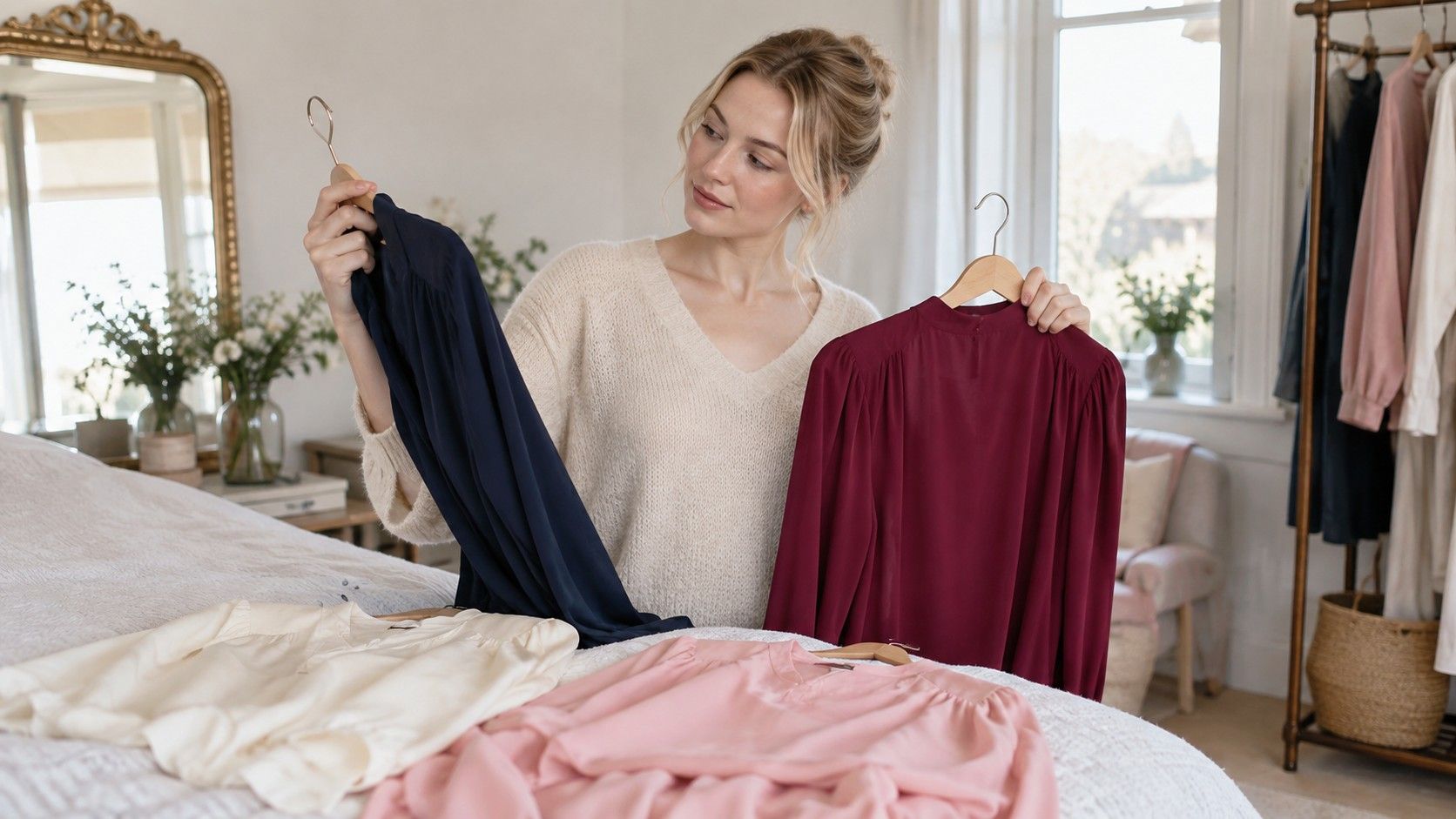
The best clothing colors for pale skin are not a short list of colors you are allowed to wear. Pale skin has many undertones and levels of contrast, and the same navy sweater can feel crisp on one person and heavy on another. It helps to stop asking whether a color is universally flattering and start checking what it does beside your face, with your hair, and in the ordinary light where you actually live.
Separate skin depth from undertone before choosing a palette
Skin depth is how light or deep the skin appears. Undertone is the warmer, cooler, or more neutral cast beneath it. They are related but not interchangeable. Two people with similarly fair skin may find different whites, reds, and browns easiest because one leans peachy and the other leans rosy or neutral. The goal is not to diagnose yourself in a mirror; it is to compare a few nearby shades rather than trusting a label on a hanger.
At a window, hold ivory and bright white under your chin, then compare soft blush with a clearer rose, navy with charcoal, and camel with cool taupe. Watch for clarity around the eyes and mouth. A good color often makes the face look more defined without making the skin look artificially darker. A difficult color can make redness or shadows feel more prominent, though that can also be a fabric or lighting issue. Keep the comparisons simple enough to repeat.
Choose a level of contrast you can enjoy all day
High contrast is not reserved for dramatic outfits. A pale face, dark hair, and navy top may create enough definition to look settled with very little styling. Low contrast can be equally attractive when pale hair, soft brows, or a gentle overall look are part of the picture. The useful test is whether the outfit looks complete from a few steps away, not whether it follows a seasonal-color chart perfectly.
Try a light, medium, and dark top with the same trousers. For example, wear ivory, muted blue, and navy with medium denim. Take a photo in daylight. If ivory blends too much but navy feels severe, the medium blue may be the regular choice, while navy becomes a dependable evening or work color. That is a practical result: it gives each item a role instead of turning the darkest one into a mistake.
Make light neutrals visible instead of letting them fade away
Ivory, soft white, light gray, oatmeal, and blush can be excellent pale skin outfit colors, but they need separation. A very light knit with very light trousers may look intentional in textured wool or linen; in thin smooth jersey, it can become a single pale block. Add a medium-denim jean, darker shoe, belt, or pendant to make the layers readable. Texture does a great deal of quiet work here.
Compare warm ivory with stark white before buying multiples. Some people find optic white lively and clean, while others prefer a softer ivory that does not make their face look pink or tired. The same is true of beige. A gray-beige trench may be easier than a yellow beige, or the reverse may be true. Look at the collar area in daylight rather than relying on the reflected light inside a changing room.
| Situation | Color starting point | Adjustment if it feels flat or harsh |
|---|---|---|
| Soft daytime outfit | Ivory, denim, and medium brown | Add texture or a darker shoe for definition. |
| Work outfit | Navy with a pale blue or white shirt | Use charcoal instead if navy feels too formal. |
| Color near the face | Berry, muted blue, or clear green | Choose a softer version if the hue arrives first. |
| All-dark look | Black or charcoal with navy | Leave a light neckline, scarf, or earring visible. |
Use dark colors without letting them take over the face
Black is not off limits for fair skin, despite the old advice. It can provide a useful frame, especially with dark hair, bold glasses, or a high-contrast personal style. Problems usually come from wearing opaque black in a high neckline with no texture, no visible skin, and no lighter detail. The outfit can become a dark field with the face floating above it.
Navy, charcoal, dark forest green, espresso, and deep burgundy offer alternatives with different temperatures. A navy blazer may be more forgiving than black because it has depth without the same hard edge. Charcoal can soften a tailored outfit, while deep burgundy gives color without the brightness of red. Test these close to the face and notice whether your eye goes to your expression first or to the shirt first.
Choose bright colors by their clarity, not by fear of being washed out
Pale skin does not require pale clothes. Clear red, cobalt, emerald, fuchsia, and sunny yellow can look brilliant when the value and undertone feel right. The trick is to let one strong color lead. Pair a cobalt jumper with dark denim and gray trainers, or a red skirt with an ivory knit and brown boots. If several bright pieces compete, the outfit may look louder than you intended, regardless of skin tone.
Soft colors also work when they have enough distinction from the skin. A dusty blue shirt may be easier than a near-skin-tone beige, because blue creates a clear edge even when it is muted. Blush can be beautiful, but compare it with rose and mauve; the best one will not make the face disappear. If a soft shade needs a darker jacket to come alive, that is useful information rather than a reason to reject it.
Check color beside the face in ordinary conditions
Use daylight first, then check the same outfit in your office, hallway, or evening restaurant light. Fair skin can look very different under warm bulbs, and phone cameras often overexpose it. Take a photo but do not let one image settle the question. Move, smile, and look at the outfit from a normal distance. Clothing is worn in rooms and streets, not frozen in a single front-facing frame.
Keep notes on combinations that made getting dressed easy: perhaps ivory with navy, soft gray with berry, or denim with a clear green. Those notes will be more valuable than a fixed chart when your hair changes, you spend more time outdoors, or your taste shifts. The best colors for pale skin are the ones that make you look present and let the clothes support the day rather than becoming the whole conversation.