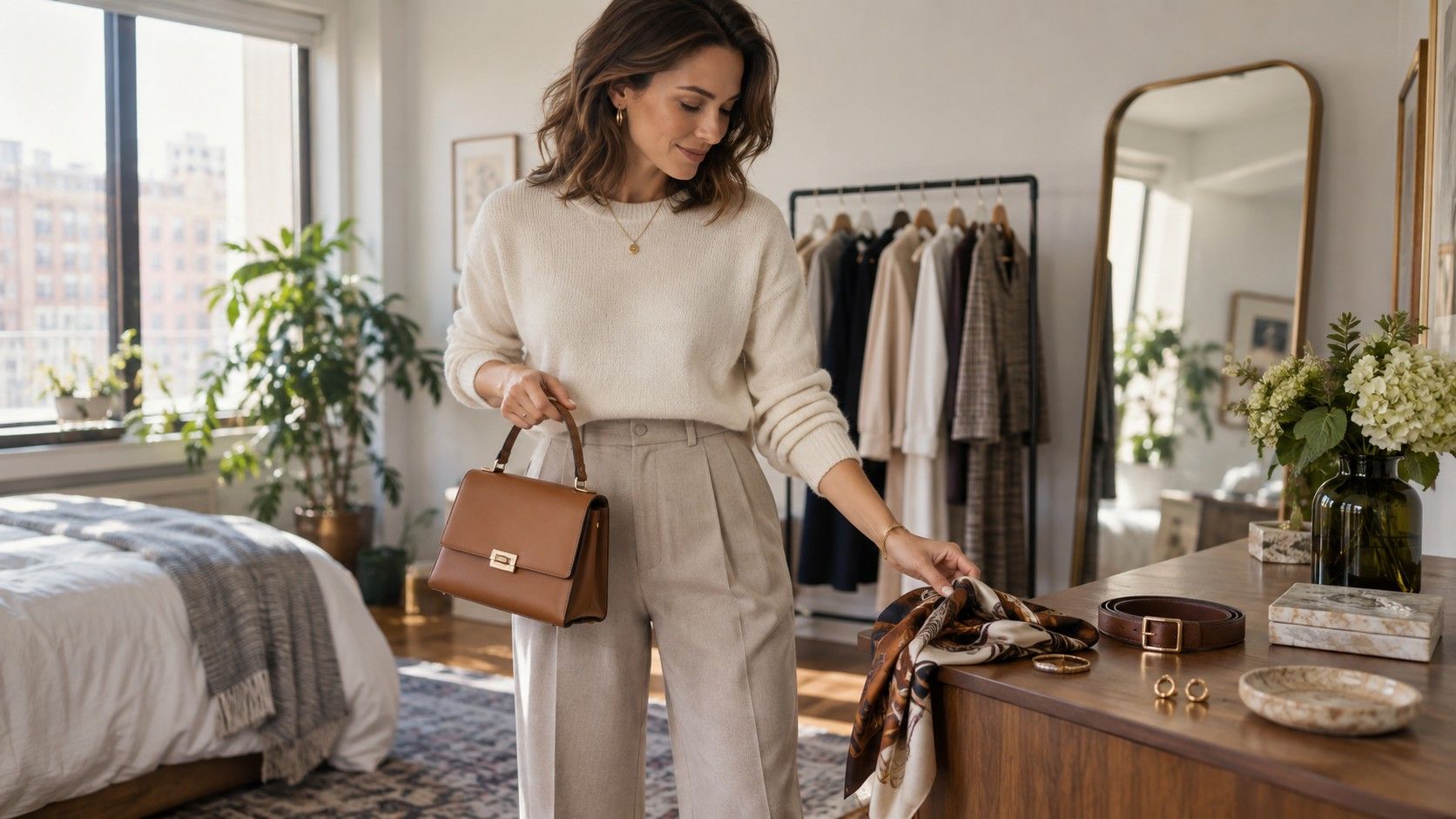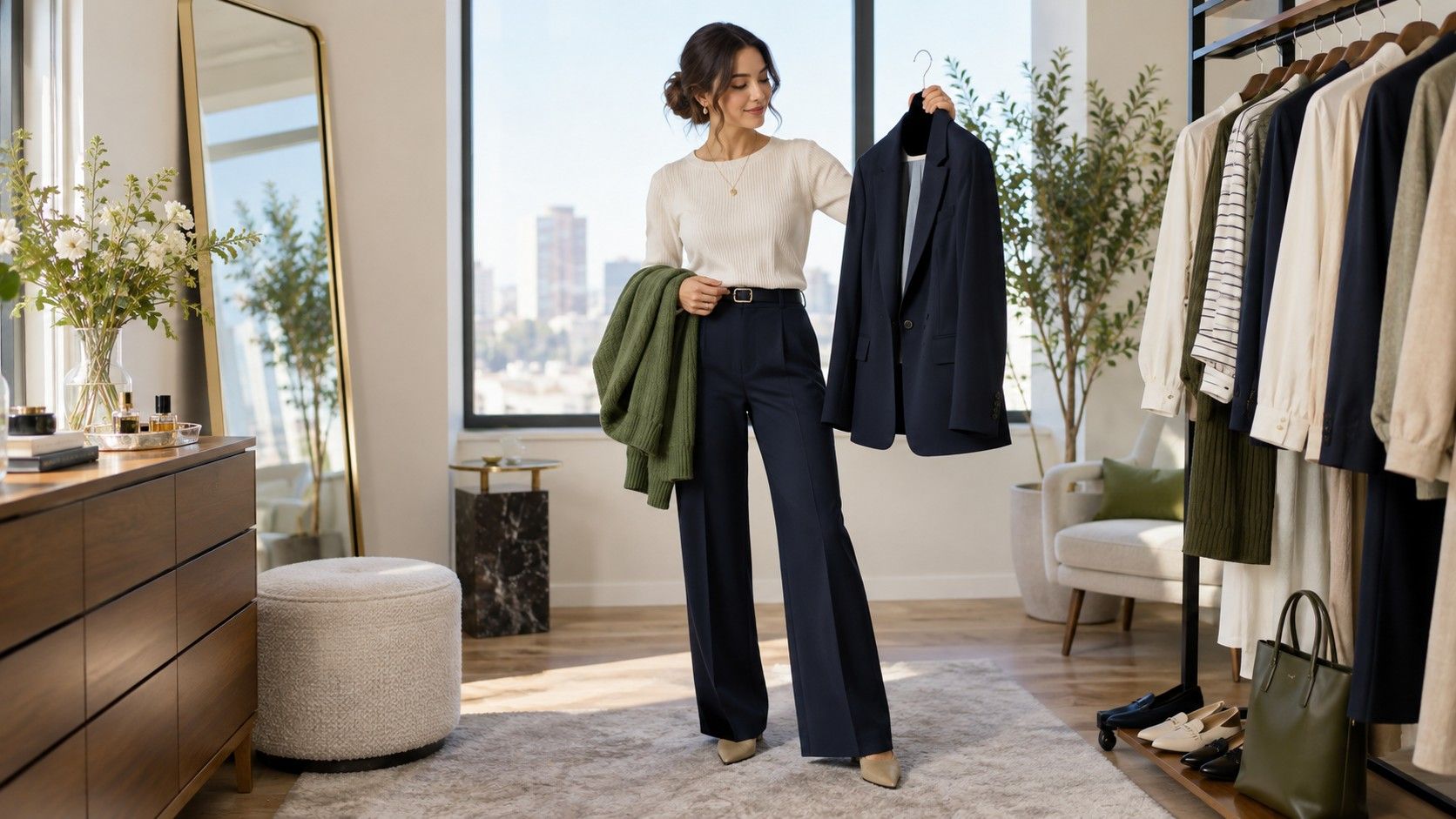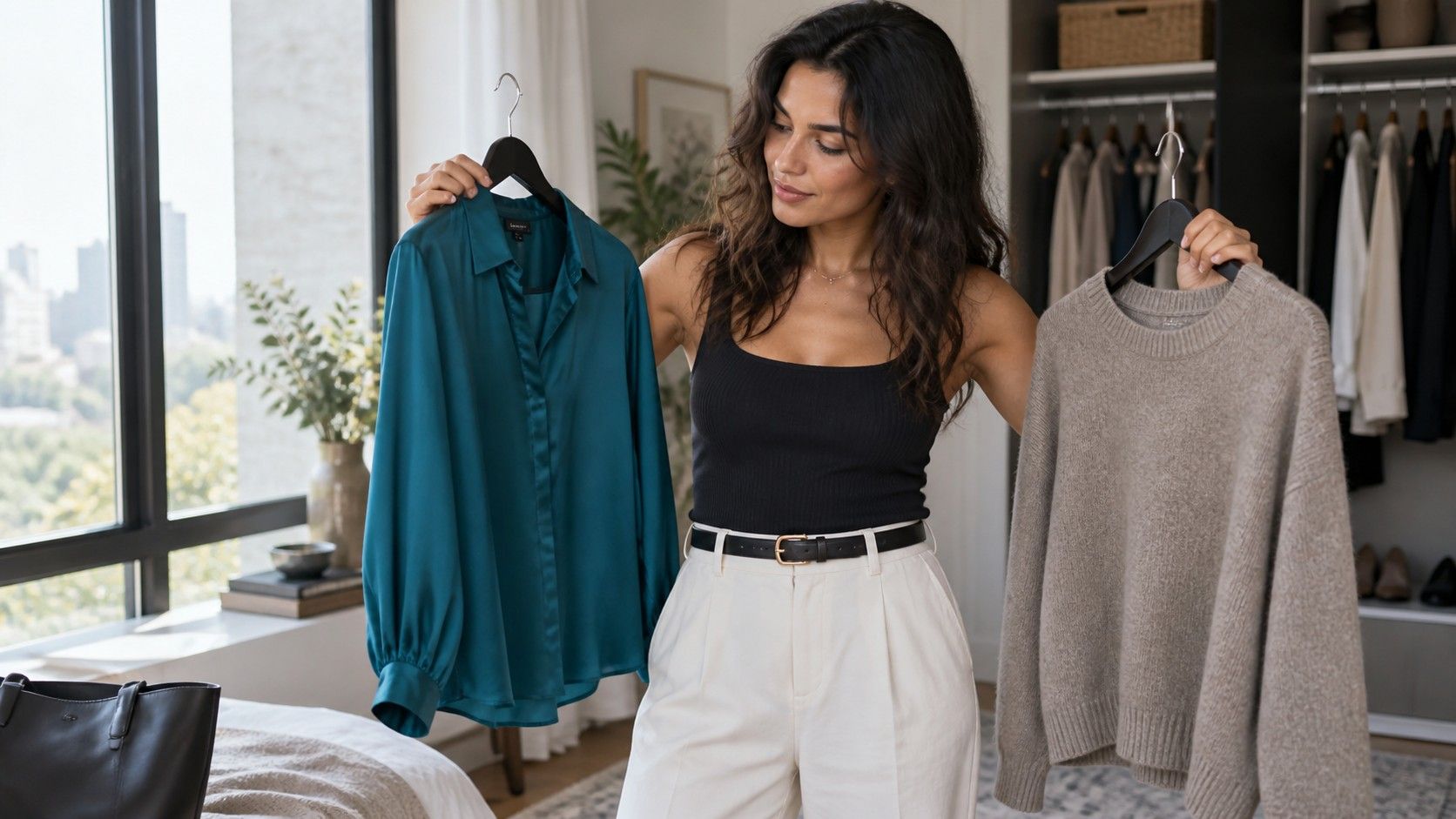
Advice about clothing colors for olive skin often starts confidently and becomes unhelpful just as fast: wear jewel tones, avoid this beige, choose that green. Olive is not one fixed shade, and a color that looks excellent on one person can turn flat on another because of hair, contrast, fabric, and the light in the room. A better approach is to test a few color families and keep the results that make your own features look clear.
Why olive skin is easy to misread in a fitting room
Olive skin can have a warm, cool, or fairly neutral cast, often with a little green-gray beneath the surface. That does not tell anyone's background or determine a universal palette. It does explain why a sales-floor mirror can be confusing. A warm spotlight may make camel look harmonious, then ordinary daylight reveals that the same camel pulls yellow. A cool LED can make a berry top look perfect and make a soft cream shirt seem lifeless.
Start by watching how your skin changes in two settings: daylight near a window and the lighting where you spend most of your week. Notice the face, not only the forearm. A shade may make the skin look more even, the eyes more present, and the mouth more defined. Another may make the jawline look gray or the under-eye area more visible. Neither reaction is dramatic proof; it is a useful clue about the temperature and depth of the garment.
Find the warmth that feels natural rather than forcing warm or cool
Compare close neighbors beneath your chin: ivory and crisp white, cognac and cooler taupe, coral and raspberry, moss and blue-green teal. Hold one color up, take it away, and immediately hold the next. The quick swap is more revealing than examining a single top for five minutes. If warm ivory brightens you while stark white feels sharp, you may prefer warmth near the face. If raspberry makes your skin look calm while coral competes, cooler accents may be easier.
Many people with olive skin can borrow from both sides, especially when the garment is not right under the chin. A warm camel trouser can work beautifully with a cooler teal shirt. A berry skirt can sit below a cream knit without needing to match your undertone exactly. Think in placement: colors close to the face deserve more scrutiny, while bags, trousers, and shoes have more freedom to support the look.
Test clear colors and softened colors as separate options
Jewel tones such as teal, emerald, cobalt, deep berry, and rich plum often give olive skin a clean contrast, but their intensity matters. A deep teal blouse can look polished because it has enough depth to sit beside the face. A very bright turquoise version may be excellent for summer, or it may arrive before you do. Compare it with a softened petrol blue, which keeps the same direction with less volume.
Muted colors are not automatically safer. Dusty sage, faded mauve, smoky blue, and mushroom brown can be refined, but some have enough gray to echo the gray-green cast in the skin and make everything look tired. Try a muted color next to one with the same hue but more clarity. If the muted version wins, use it with a sharper neutral such as ivory, dark denim, or chocolate. If the clearer version wins, let the rest of the outfit stay restrained.
| Color family | First shade to test | Useful comparison |
|---|---|---|
| Light neutrals | Soft ivory | Compare with stark white and light beige in daylight. |
| Warm neutrals | Medium camel | Try it with teal or berry near the face. |
| Blue-green shades | Deep teal | Test against turquoise and muted petrol. |
| Red-purple shades | Berry or wine | Compare with coral to see which clears the face. |
| Earthy greens | Olive or moss | Use a contrasting ivory or dark denim layer. |
Build neutral outfits that do not vanish into the skin
Neutrals are where olive undertone clothing becomes most practical. Very pale beige, gray-brown, and washed khaki can be close to the skin in both value and mutedness, so they may need contrast. That does not make them bad purchases. A light beige blazer can look intentional over a crisp white tee, a dark navy knit, or a patterned scarf. On its own with a similarly soft top, it may simply lack a visible edge.
Try neutrals at different depths. Cream, chocolate, navy, charcoal, olive, and medium denim give you several places to start. Black can be striking but may look hard if every other piece is equally dark; a softer black knit, a visible neckline, or a lighter earring can change the effect. Brown leather tends to work well when its warmth relates to another part of the outfit rather than sitting alone as a random accessory.
Use fabric and makeup as variables, not explanations for every miss
A color is not identical across fabrics. Teal in matte cotton is quiet; teal in satin catches light and reads brighter. A camel wool coat looks softer than a camel nylon shirt. Before deciding that an entire hue is wrong, try it in another texture or farther from the face. A problematic yellow top may become an excellent leather belt or canvas trainer.
Makeup, facial hair, hair color, and glasses also change the picture, but they should not carry the whole outfit. If a blouse only looks good with a specific full-makeup look, treat it as an occasional piece. If it still works on a rushed morning with bare skin and your normal glasses, it is more likely to earn regular use. The aim is not to look polished at every second; it is to avoid buying colors that need constant rescuing.
Make a small palette from what you already wear
Lay out your most-worn trousers, coats, shoes, and tops before buying more color. You may find that deep denim, cream, dark brown, and a berry accent already form a generous wardrobe. Add one new shade only if it connects to at least two existing pieces. A teal shirt is more useful when it works with denim, charcoal, and camel than when it requires a special skirt and a new pair of shoes.
Take photos of successful combinations in daylight and label them simply: “cream plus deep teal,” “moss plus dark denim,” or “berry with chocolate.” Over time, this gives you a personal answer to which clothing colors for olive skin feel good on you. It leaves room for experiments, seasons, and changing taste without pretending that a skin label should run your wardrobe.